

Roof Repair in Spring Valley, NV
If you’re a Spring Valley homeowner dealing with a ceiling stain, a cracked tile, or a foam roof that hasn’t been touched in years, you’re in the right place. Our Roof Repair crew knows this zip code — the hybrid rooflines, the aging SPF sections, the underlayment that’s been quietly failing since the Clinton administration. We serve Spring Valley directly and can get eyes on your roof fast. Call (725) 400-0403 for a free estimate — Wayne Ford picks up.
Why Las Vegas Roof Repair Services Is Spring Valley’s Preferred Roof Repair Company
Spring Valley homeowners have trusted us with their roofs for over 11 years, and that trust shows up in the numbers: 613 verified five-star reviews, earned one job at a time across the 89103 corridor and the surrounding neighborhoods along South Jones Boulevard and West Flamingo Road. That’s not a marketing claim — it’s a public record you can check.
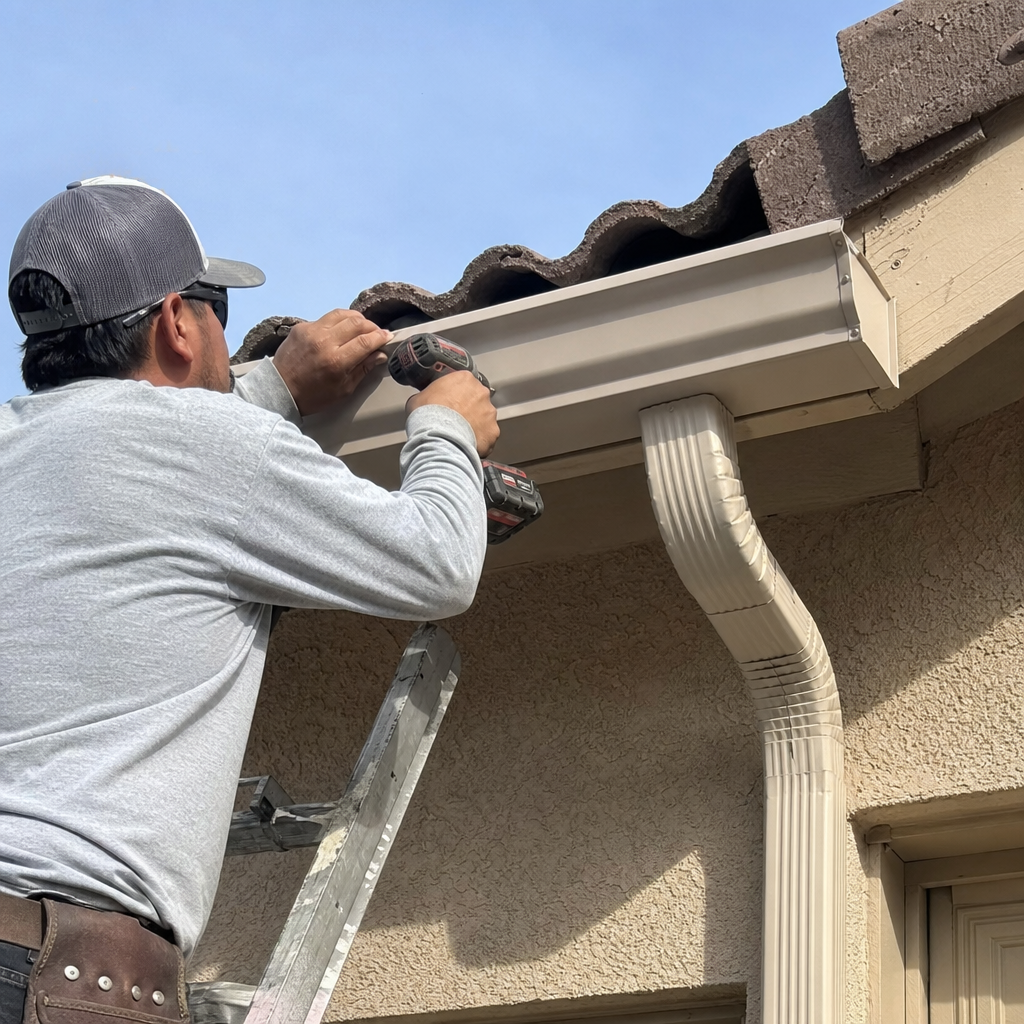
What separates us from larger outfits is straightforward: Wayne Ford is both the owner and the lead technician. He’s the one on the ladder, the one reading the foam core, the one making the call on what actually needs to happen. Spring Valley customers don’t get a subcontracted crew managed from a dispatch center. They get the decision-maker on the roof.
We’re also familiar with the specific construction patterns throughout Spring Valley’s tract-home stock — the late-1980s tile-and-foam hybrids near South Valley Parkway, the three-tab shingle homes tucked behind Meadows Lane, the flat-section additions that have been recoated once in 25 years. Local knowledge matters on a repair call. We bring it every time.
What happens when you call
- 1
A real person answersNo phone trees — you reach a local pro.
- 2
You get an upfront price rangeHonest numbers before anyone is dispatched.
- 3
A background-checked tech heads outLicensed & insured, dispatched right away.
- 4
You approve before work beginsNothing starts until you say go.
Our Roof Repair Services in Spring Valley
Flat Roof Patch
Flat roof repair is the most urgent service we provide in Spring Valley, and the reason is specific: a significant share of homes in the 89103 zip code feature spray-polyurethane-foam (SPF) sections over garages or rear additions that have missed multiple elastomeric recoat cycles. In the Mojave’s extreme UV environment, an expired elastomeric coating doesn’t just look weathered — it becomes permeable, letting monsoon moisture infiltrate the foam core quietly for years before a ceiling stain appears. We assess foam condition by probing and coring, not by appearance alone. Patching that doesn’t address the underlying coating failure is a short-term fix; we do it correctly the first time through, including a compatible base coat and fresh elastomeric finish.

Leak Repair
In Spring Valley, the leak is rarely where the stain is. The July–August monsoon delivers intense, fast-moving rainfall onto soil that can’t absorb it quickly, and even modest drainage deficiencies on flat sections cause destructive ponding that works its way through any existing crack or separation. We trace moisture intrusion to its actual source — not the first visible wet spot — before any repair work begins. On Spring Valley’s older homes, that often means the tile field, the foam section, and the flashing at the junction between them all need evaluation on the same visit.

Flashing Repair
Valley flashing at the transition between a pitched concrete-tile roof and a flat foam section is one of the most commonly missed failure points in Spring Valley’s housing stock. Over decades of thermal cycling — cold desert nights, 170°F summer surface temps — that flashing corrodes, separates, or lifts, creating a direct funnel point where monsoon runoff bypasses both roofing systems entirely and enters the wall cavity. We reseat and seal those transitions properly, using materials compatible with both the tile field and the foam section so the repair holds through multiple monsoon seasons.

Shingle Replacement
Plenty of Spring Valley homes — particularly those built in the late 1980s and early 1990s along streets near the Meadows Mall area — are finished in three-tab asphalt shingle rather than concrete tile. After 30-plus years of UV degradation and thermal cycling, granule loss, curling, and cracked tabs are common findings. We work with GAF, CertainTeed, Owens Corning, IKO, Atlas, Tamko, and Boral shingles, so replacement materials can be matched to what’s already on the roof or upgraded to a more durable profile — your call, not ours.

The Spring Valley Dual-System Problem — A Field Vignette
Spring Valley’s 89103 corridor is dense with late-1970s-to-mid-1990s stucco tract homes whose hybrid rooflines combine a low-pitch concrete-tile field with a flat SPF section over the garage or a rear addition. That configuration means a single repair call often requires two completely different repair disciplines on the same visit. The pitched tile section needs underlayment and flashing evaluation. The flat foam section needs coating assessment and, frequently, core probing for moisture. Most general contractors are equipped for one or the other. We’re set up for both, because in Spring Valley, both are almost always in the same conversation.
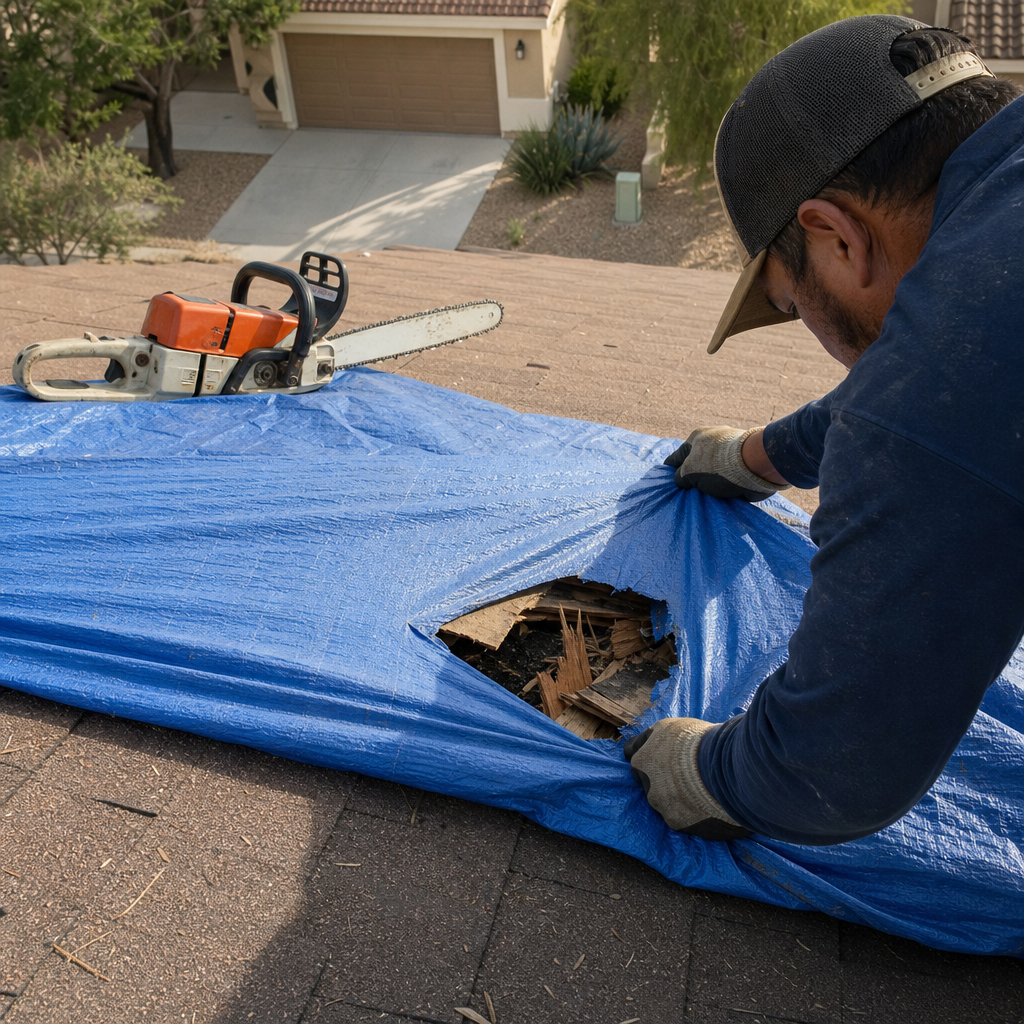
We were called to a single-story stucco home in the 89103 corridor after the homeowner noticed a brown ceiling stain spreading near the garage-to-living-room transition. A plumber had already been out and found nothing. We cored the flat SPF section over the garage and pulled out foam saturated with years of trapped water — the elastomeric topcoat had gone brittle and cracked through at least two missed recoat cycles. After removing the compromised foam, we applied a fresh Boral-compatible flashing seal at the tile-to-foam transition, patched the flat section with a compatible base coat and new elastomeric finish, and confirmed all monsoon-season drainage paths on the flat deck were clear before signing off. The plumber wasn’t wrong. The roof was just doing a convincing impression of a plumbing problem for several years.

Trusted Brands We Service in Spring Valley
We work with seven manufacturers — GAF, CertainTeed, Owens Corning, IKO, Atlas, Tamko, and Boral — which means Spring Valley homeowners aren’t limited to whatever material we happen to have on the truck. Whether you’re patching an existing Owens Corning shingle field or looking at IKO or Atlas for a partial replacement on a late-1980s tract home, we can source and match. For Spring Valley’s flat sections, Boral-compatible flashing materials and elastomeric coatings are stocked for fast turnaround — we’re not waiting on special orders when a monsoon patch is urgent.
Common Roof Repair Problems We See in Spring Valley Homes
- Saturated SPF foam cores from expired elastomeric coatings: The Mojave’s UV index is among the highest in the continental US, and elastomeric topcoats on flat SPF sections degrade and crack on a 3–5 year cycle. Spring Valley homes that have skipped two or three recoat cycles often have foam cores absorbing monsoon moisture invisibly — no surface evidence until a ceiling stain appears indoors, sometimes years after infiltration begins.
- Failed concrete-tile underlayment on 4:12 pitches: Tile installed in the late 1980s and early 1990s frequently sits on underlayment that has long exceeded its design life. Decades of thermal cycling between freezing desert nights and 170°F summer surface temperatures crack the underlayment at seams and low points — water reaches the wood deck even when the tiles themselves look intact from the street. This is one of the most commonly missed failure modes in Spring Valley.
- Corroded or separated valley flashing at tile-to-foam transitions: The junction between the pitched tile field and the flat foam section — a detail found on tract homes throughout Spring Valley’s 89103 zip — is a chronic weak point. Flashing that was adequate in 1991 has been through 30-plus summers of thermal movement. Separation at that joint creates a direct water entry path into the wall assembly, bypassing both roofing systems entirely.
- Monsoon ponding on under-drained flat sections: Spring Valley’s flat and near-flat roof sections were designed for a desert environment, but the North American Monsoon delivers intense, rapid rainfall that overwhelms slow or blocked drainage. Even a two-inch scupper can’t keep up with a July cloudburst. Standing water on foam or modified bitumen sections drives moisture into any existing crack or seam within hours.
Pricing for Roof Repair in Spring Valley, NV
Flat roof patch work on Spring Valley’s SPF sections typically runs $350–$900 depending on the square footage affected and whether the foam core needs to be removed and replaced or just recoated. A standard elastomeric recoat on a garage-size flat section (roughly 400–600 sq ft) generally falls in the $600–$1,400 range. Flashing repair at the tile-to-foam transition runs $250–$550 for most Spring Valley configurations. Shingle replacement — partial sections on a single-story home — typically lands between $400 and $1,100 depending on pitch, material, and square footage. Concrete-tile underlayment repair is more involved: expect $800–$2,500 for a section repair on a late-1980s home, depending on deck condition and how much tile needs to come off. These are Spring Valley market ranges for 2025–2026. Free estimates mean you’ll know your exact number before any work starts. Call (725) 400-0403.
We Also Serve Cities Near Spring Valley
Our crews work throughout the Las Vegas Valley, including Las Vegas proper, Summerlin South to the northwest, and North Las Vegas across the valley floor. If you’re just outside Spring Valley in any of these areas, the same crew, the same pricing transparency, and the same Wayne Ford-led approach applies. One call covers the region.
Serving Spring Valley, NV — Our Local Coverage Area
We’re based in the Spring Valley area and know this community well. Use the map below to see our service coverage — if you’re nearby, we can almost certainly help.
FAQs — Roof Repair in Spring Valley
Yes — both sections need to be evaluated together, because the failure point is usually the junction between them. On Spring Valley’s hybrid-roofline homes, valley flashing at the tile-to-foam transition is the most likely entry point after a monsoon event. Water that gets past that joint can travel laterally inside the wall cavity before showing up as a ceiling stain, making it look like the source is somewhere else entirely. A post-storm inspection that only checks the tile field or only checks the foam section will miss the most common failure mode we find in the 89103 corridor. Call (725) 400-0403 to schedule a combined assessment.
If the stain is near the garage-to-living-space transition and no plumber has found a source, the flat foam section is the likely culprit. Saturated SPF foam holds water like a sponge — it can absorb moisture through cracked elastomeric coating for years before the ceiling below shows any sign. The only reliable way to confirm it is to core the foam and check moisture content directly. We’ve made this diagnosis on Spring Valley homes multiple times after plumbers cleared their systems. A quick roof inspection and core test will settle it. Call (725) 400-0403 and we’ll get out there.
In the Mojave Desert’s UV environment, elastomeric coatings on SPF roofs need to be reapplied every 3–5 years — that cycle is faster here than in almost any other climate in the US because of the combination of extreme UV index and summer surface temperatures that routinely exceed 170°F. Skip one cycle and the coating becomes brittle and begins to crack. Skip two or three and the foam core starts absorbing moisture through those cracks, silently, with no visible surface evidence until a ceiling stain appears. By that point, the foam in the affected area is often fully saturated and needs to be removed rather than just recoated — which is significantly more work and cost. Annual visual checks and a recoat on schedule is far cheaper than a core replacement. Call (725) 400-0403 to find out where your roof stands.
Tile conceals underlayment condition completely. A roof that looks clean and intact from the ground can be sitting on underlayment that cracked and separated years ago. On homes built in the late 1980s in Spring Valley’s 89103 tract neighborhoods, the original underlayment has typically been through 30-plus years of thermal cycling — summer surface temps above 170°F followed by cold desert nights. That cycling causes underlayment to crack at seams and low points over time. The tile itself may be fine, but when monsoon rain hits, water routes under the tiles at the first gap and reaches the wood deck before anyone notices. We lift a section of tile on every Spring Valley inspection to check what’s actually underneath.
After a monsoon, Spring Valley homeowners with flat or near-flat foam sections should look for three things: standing water that hasn’t drained within 24–48 hours (ponding damages any existing coating cracks); new surface bubbling or blistering in the elastomeric coating (a sign moisture has been driven under the surface layer); and any new separation or lifting at the perimeter edge or at the tile-to-foam flashing joint. Inside the home, watch the ceiling near the flat section — staining that wasn’t there before the storm is a direct signal. If you see any of these, don’t wait for the next storm to confirm it. Call (725) 400-0403 and we’ll get a free assessment scheduled before the next monsoon cell moves through.
Ready for a straight answer on what your Spring Valley roof actually needs? Wayne Ford will be on-site — not just on the estimate. Call (725) 400-0403 for a free roof inspection and repair estimate. We serve the full Spring Valley 89103 corridor and can typically schedule an assessment quickly after your call. Over 613 five-star reviews. 11 years of roofs. Zero shortcuts.
Reviewed by Wayne Ford, Owner and Lead Technician at Las Vegas Roof Repair Services, serving Spring Valley and the Las Vegas Valley since 2013.